

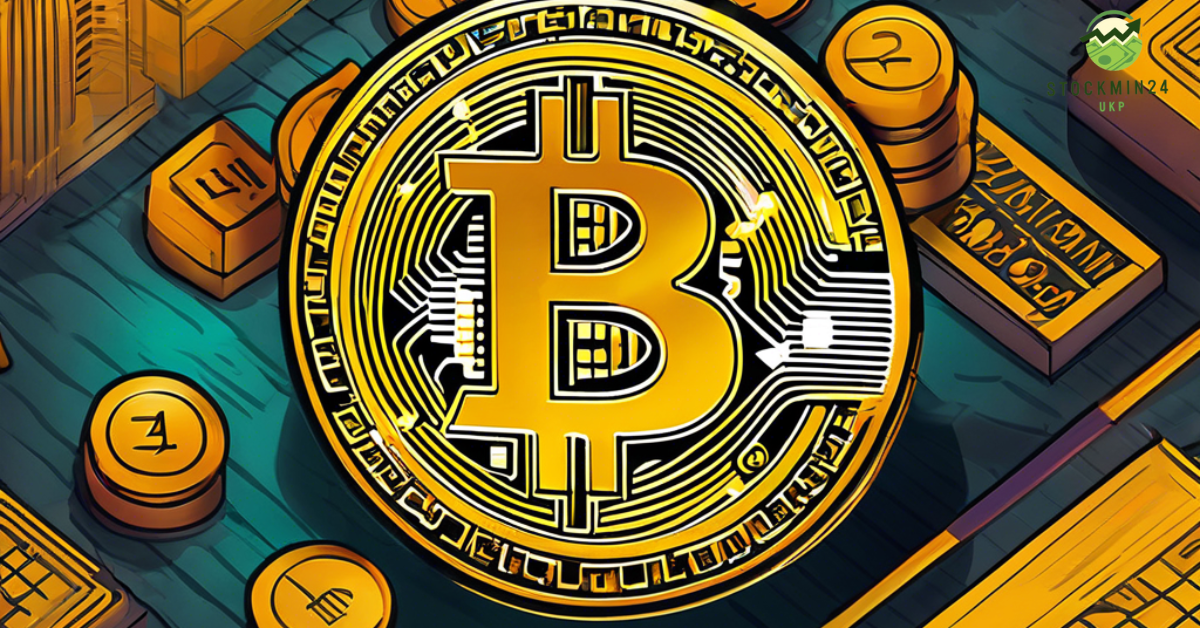
Should You Invest in Bitcoin Now? A Comprehensive Guide for 2023
Introduction
Bitcoin Now. The question “Should You Invest in Bitcoin Now?” has surged in popularity as Bitcoin continues to dominate headlines. With its volatile price swings, growing institutional adoption, and evolving regulatory landscape, potential investors face a complex decision. This article explores the pros, cons, and critical factors to consider, while addressing content gaps in top-ranking blogs. We’ll also analyze current cryptocurrency market trends, Bitcoin investment risks, and expert insights to help you make an informed choice.

Understanding Bitcoin: The Digital Gold
Bitcoin, the pioneering cryptocurrency, operates on decentralized blockchain technology. Often dubbed “digital gold,” it’s celebrated for its finite supply (21 million coins) and censorship-resistant nature. Unlike traditional currencies, Bitcoin isn’t controlled by governments, making it attractive during economic uncertainty. However, its price volatility—often swinging 10–20% in days—raises questions: Should You Invest in Bitcoin Now? or wait for stability?
Pros of Investing in Bitcoin in 2023
- Scarcity and Long-Term Value
Bitcoin’s halving events (next expected in 2024) reduce mining rewards, historically triggering price rallies. For instance, post-2020 halving, Bitcoin surged from $9,000 to $60,000+ in 18 months. Analysts argue scarcity could drive long-term gains, especially as adoption grows. - Institutional Adoption
Major companies like Tesla and MicroStrategy now hold Bitcoin on their balance sheets. BlackRock’s recent Bitcoin ETF application signals growing Wall Street interest, potentially boosting legitimacy and liquidity. - Hedge Against Inflation
With central banks printing fiat currency, Bitcoin’s fixed supply appeals to investors fearing inflation. During 2021–2022’s high inflation, Bitcoin outperformed gold briefly, though its volatility remains a double-edged sword. - Portfolio Diversification
Adding Bitcoin to a diversified portfolio may reduce risk. Its low correlation with stocks and bonds can balance losses during market downturns.
Cons and Risks of Bitcoin Investment
- Extreme Volatility
Bitcoin’s price swings are notorious. In 2022, it plummeted 65% amid macroeconomic headwinds, erasing billions in value. Short-term investors risk significant losses if timing the market incorrectly. - Regulatory Uncertainty
The U.S. SEC has cracked down on crypto exchanges like Binance and Coinbase, creating legal ambiguities. Future regulations could impact Bitcoin’s accessibility and value.
- Security Concerns
Hacks, phishing scams, and exchange collapses (e.g., FTX) highlight security risks. Investors must prioritize secure storage solutions like hardware wallets. - Environmental Impact
Bitcoin mining consumes vast energy—often from fossil fuels. While renewable energy adoption is rising, environmental concerns persist, potentially affecting public sentiment.
2023 Bitcoin Market Analysis: Key Trends
To answer “Should You Invest in Bitcoin Now?“, examine current trends:
- Macroeconomic Factors: Rising interest rates have dampened speculative investments. However, potential rate cuts in 2024 could reignite interest in risk assets like Bitcoin.
- ETF Developments: Approval of a U.S. Bitcoin ETF could attract billions in institutional capital, mirroring gold’s ETF-driven rally in the 2000s.
- Technological Upgrades: The Lightning Network improves Bitcoin’s transaction speed, enhancing its utility as a payment system.
Bitcoin vs. Traditional Investments
Comparing Bitcoin to stocks, bonds, and gold reveals unique trade-offs:
- Stocks: Offer dividends and steady growth but lack Bitcoin’s upside potential.
- Gold: Less volatile but lacks Bitcoin’s portability and divisibility.
- Real Estate: Illiquid vs. Bitcoin’s 24/7 market access.
Bitcoin’s risk-reward profile suits aggressive investors comfortable with volatility.
Expert Opinions: Bullish vs. Bearish Outlooks
- Bulls: Ark Invest’s Cathie Wood predicts Bitcoin could reach $1.48 million by 2030 due to institutional adoption.
- Bears: JPMorgan CEO Jamie Dimon calls Bitcoin a “hyped-up fraud,” citing regulatory risks.
Diverse viewpoints underscore the importance of personal due diligence.
How to Invest in Bitcoin Safely
If you decide to invest, follow these steps:
- Choose Reputable Exchanges: Use platforms like Coinbase or Kraken, compliant with U.S. regulations.
- Secure Your Assets: Transfer Bitcoin to cold wallets (e.g., Ledger) to avoid exchange hacks.
- Dollar-Cost Averaging (DCA): Invest fixed amounts monthly to mitigate timing risks.
- Allocate Wisely: Limit crypto to 1–5% of your portfolio, ensuring you can withstand losses.
Psychological Factors: Avoiding FOMO and Hype
Social media hype often fuels impulsive investments. The 2021 bull run, driven by retail FOMO, ended in a 75% crash. Stick to a strategy aligned with your risk tolerance and financial goals.

The Halving Effect: What History Tells Us
Post-halving years (2012, 2016, 2020) saw Bitcoin rise 8,000%, 2,000%, and 700% respectively. While past performance doesn’t guarantee results, the 2024 halving could catalyze another cycle.
FAQs: Section
- Is Bitcoin a Good Investment in 2023?
It depends on risk tolerance and horizon. Long-term holders may benefit; short-term traders face volatility. - Can Bitcoin Replace Gold?
Unlikely soon, but it’s gaining traction as a digital alternative. - What Are Bitcoin ETFs?
Exchange-traded funds tracking Bitcoin’s price, offering indirect exposure without direct ownership.
Conclusion
Bitcoin remains a high-risk, high-reward asset. While its potential for growth and inflation hedging is compelling, volatility and regulatory risks demand caution. Should You Invest in Bitcoin Now? If you’re risk-tolerant, have a long-term horizon, and can stomach turbulence, a small, strategic allocation might be prudent. Always consult a financial advisor and stay updated on cryptocurrency market trends.
By weighing Bitcoin investment risks, technological advancements, and macroeconomic signals, you can make a decision aligned with your financial future.
FAQ: Section
1. Is Bitcoin a safe investment in 2023 ?
Bitcoin is inherently volatile and speculative, making it riskier than traditional assets like stocks or bonds. While its scarcity and adoption trends suggest long-term potential, short-term price swings (e.g., 30–50% drops) are common. Only invest what you can afford to lose.
2. How does Bitcoin compare to stocks or gold ?
Bitcoin offers higher growth potential but comes with greater volatility. Unlike stocks, it pays no dividends, and unlike gold, it’s purely digital. However, it’s portable, divisible, and increasingly seen as “digital gold” for inflation hedging.
3. What are the biggest risks of investing in Bitcoin ?
- Regulatory crackdowns: Governments may impose stricter crypto rules.
- Security breaches: Hacks and scams remain prevalent.
- Market volatility: Prices can crash rapidly due to macroeconomic shifts.
4. Should I wait for the 2024 Bitcoin halving to invest ?
Historically, halvings (which reduce mining rewards) preceded bull markets. However, timing the market is risky. Dollar-cost averaging (DCA) before and after the event may mitigate timing risks.
5. Can Bitcoin replace traditional currencies ?
Unlikely in the near term. Bitcoin’s primary use cases are as a store of value and speculative asset, not daily transactions due to scalability challenges (though upgrades like the Lightning Network aim to improve this).
6. What is a Bitcoin ETF, and why does it matter ?
A Bitcoin ETF (exchange-traded fund) allows investors to gain exposure to Bitcoin without owning it directly. Approval by the SEC could attract institutional investors, boosting liquidity and price stability.
7. How much of my portfolio should be in Bitcoin ?
Financial advisors typically recommend limiting crypto exposure to 1–5% of your total portfolio, depending on your risk tolerance. Never allocate funds earmarked for emergencies or retirement.
8. Does Bitcoin’s environmental impact affect its value ?
Criticism of Bitcoin’s energy use (often compared to small countries’) could influence regulations or public perception. However, many miners are transitioning to renewable energy, which may ease concerns long-term.
9. What’s the best way to buy and store Bitcoin safely ?
- Use regulated exchanges like Coinbase or Kraken.
- Transfer coins to a hardware wallet (e.g., Ledger) for secure offline storage.
- Avoid keeping large amounts on exchanges prone to hacks.
10. Can Bitcoin survive another market crash like 2022 ?
Bitcoin has rebounded from multiple crashes (e.g., 2018’s 80% drop). Its decentralized nature and fixed supply suggest resilience, but recovery timelines depend on broader economic conditions.
11. How do interest rates impact Bitcoin’s price ?
Higher interest rates often hurt risk assets like Bitcoin, as investors flock to bonds or savings accounts. Conversely, rate cuts or loose monetary policies could reignite bullish momentum.
12. Should I invest in Bitcoin now or wait for a dip ?
Predicting price movements is nearly impossible. Dollar-cost averaging (investing fixed amounts regularly) reduces the impact of volatility and avoids the stress of timing the market.
13. What role does FOMO play in Bitcoin investing ?
Fear of missing out (FOMO) often drives impulsive buying during rallies (e.g., 2021’s $69k peak). Stick to a disciplined strategy to avoid emotional decisions.
14. Are there tax implications for Bitcoin investments ?
Yes. In the U.S., Bitcoin is taxed as property. Capital gains apply when selling, trading, or spending it. Keep detailed records of transactions for reporting.
15. What long-term trends support Bitcoin’s growth ?
- Institutional adoption (e.g., BlackRock, Fidelity).
- Global inflation concerns.
- Technological advancements (e.g., Taproot upgrades).