

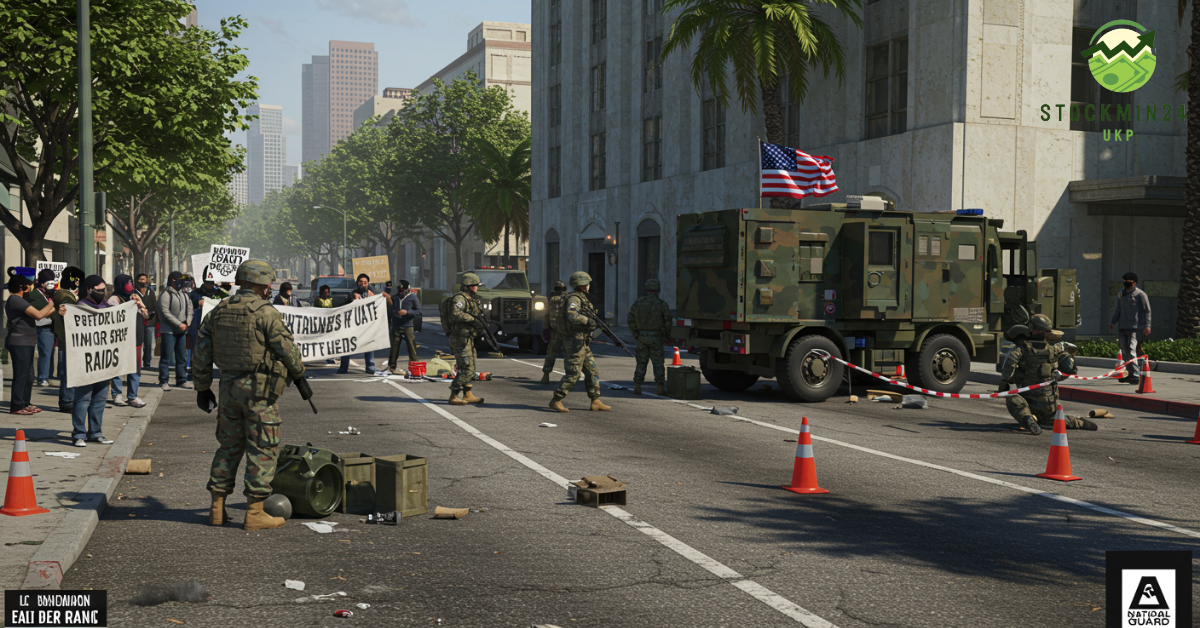
US National Guard Reportedly Arrives in LA After Protests Over Immigration Raids
US National. Los Angeles, CA – June 2025
Tensions are running high in Los Angeles after reports confirmed the deployment of the US National Guard in response to a wave of protests sparked by ongoing federal immigration raids. The move comes amid a contentious national debate over immigration enforcement, sanctuary cities, and civil rights.
The Spark: Immigration Raids Across California
The situation escalated earlier this week when federal immigration agents launched a series of surprise raids across Southern California, targeting undocumented immigrants in what authorities described as a “coordinated enforcement action.” The raids reportedly resulted in hundreds of detentions, drawing sharp criticism from immigrant advocacy groups, city officials, and human rights organizations.
Los Angeles, a self-declared sanctuary city, has long resisted federal immigration crackdowns. Local leaders argue that these raids not only disrupt communities but also erode trust between immigrant residents and law enforcement. As news of the detentions spread, demonstrators gathered in front of the Federal Building downtown, quickly growing into citywide protests.
The Response: National Guard Deployment
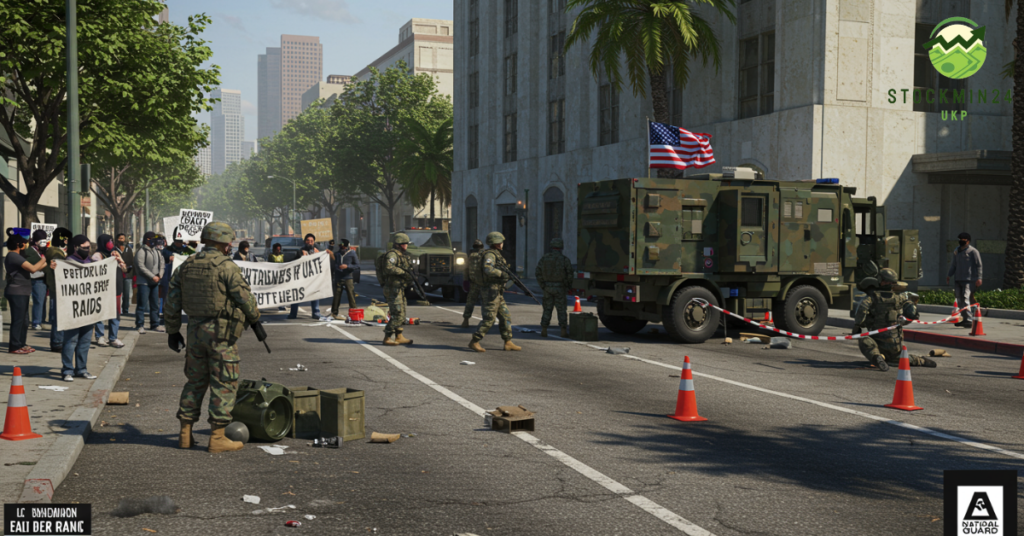
By Thursday evening, multiple sources reported that National Guard troops were arriving in Los Angeles under federal orders to “assist with crowd control and secure federal property.” While the Department of Homeland Security has not officially confirmed the scale or duration of the deployment, anonymous officials say the move is a precaution in anticipation of potential unrest.
A spokesperson for the California National Guard confirmed their presence but emphasized a limited and non-confrontational role. “Our mission is to support local and federal agencies in ensuring public safety and protecting infrastructure,” said Major Teresa Ruiz.
Despite these assurances, the deployment has drawn backlash from civil rights advocates and local politicians who view it as a militarized overreach into a civic matter.
Protests Intensify Across the City
As of Friday, demonstrations continued to swell in size and intensity. Protesters have blocked traffic on major arteries such as the 101 Freeway, staged sit-ins outside ICE facilities, and held candlelight vigils for detained community members.
Activists from groups like United We Dream, CHIRLA (Coalition for Humane Immigrant Rights of Los Angeles), and Black Lives Matter joined forces to denounce what they call “an aggressive and inhumane immigration policy.”
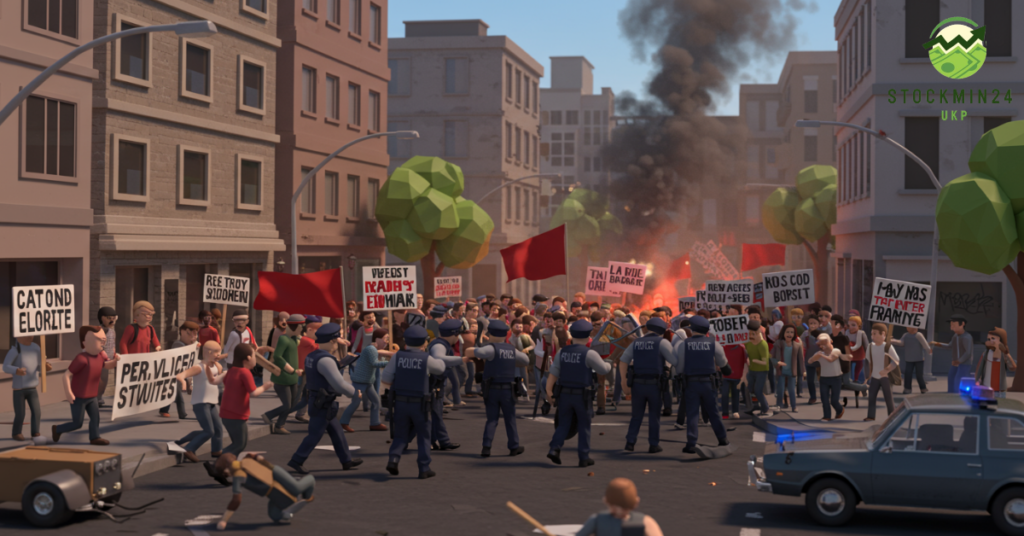
“We’re not just fighting for undocumented immigrants; we’re fighting for the soul of this country,” said Carmen Rodriguez, a protest leader and DACA recipient. “This is about how we treat people, how we define justice.”
City Leaders Push Back
Mayor Karen Bass issued a public statement late Thursday denouncing the raids and questioning the need for National Guard involvement. “Los Angeles does not need troops patrolling our streets. We need dialogue, respect, and a humane approach to immigration,” she stated.
City Council members have called for an emergency session to address both the immigration policy’s impact and the deployment of federal forces. Several councilmembers suggested introducing legislation to reaffirm LA’s sanctuary status and limit city collaboration with ICE.
Federal Perspective
The Department of Homeland Security, in a brief press conference, defended the raids as “targeted operations against individuals with outstanding removal orders and criminal backgrounds.” DHS Secretary Alejandro Mayorkas reiterated that federal law enforcement has the right to operate anywhere in the country.
However, immigration lawyers and watchdog groups dispute the government’s narrative, citing numerous reports of individuals without criminal records being detained. Videos circulating on social media show agents entering homes and businesses without clear warrants, fueling further public outrage.
Community Impact
For many families, the fear is not political — it’s personal. Children stayed home from school. Local clinics reported a drop in immigrant patients afraid to leave their homes. Grocery stores in largely Latino neighborhoods saw declining foot traffic. A sense of fear and uncertainty has blanketed communities.
Maria Gutierrez, a mother of three and legal resident, said, “Even though I have papers, I’m scared for my neighbors, my kids’ friends. Nobody feels safe.”
FAQ: Table
| Question | Answer |
|---|---|
| Why was the National Guard sent to Los Angeles? | The National Guard was reportedly deployed to assist with crowd control and protect federal property amid protests following immigration raids. |
| Who ordered the deployment? | While not officially confirmed, sources suggest the order came from the Department of Homeland Security in coordination with the federal government. |
| What are these immigration raids about? | The raids targeted undocumented immigrants, especially those with prior deportation orders or criminal backgrounds, according to DHS. However, many claim individuals without records were also detained. |
| Is Los Angeles a sanctuary city? | Yes, LA has declared itself a sanctuary city and generally limits cooperation with federal immigration enforcement. |
| How have LA officials responded? | City leaders, including the mayor and council members, have condemned the raids and criticized the National Guard deployment as excessive. |
| Are protests ongoing? | Yes, demonstrations have been taking place across the city, with increasing participation from advocacy groups and local residents. |
| Is there a curfew or emergency order in place? | As of now, there is no official curfew, but some areas are under heightened surveillance and restricted access. |
| Can National Guard troops enforce immigration law? | No, the National Guard does not have the authority to enforce immigration laws but can support logistical and security functions. |
Timeline of Events
| Date | Event |
|---|---|
| June 3, 2025 | ICE raids begin across Southern California. |
| June 4, 2025 | Protests erupt in downtown LA; social media videos go viral. |
| June 5, 2025 | National Guard units reportedly arrive in Los Angeles. |
| June 6, 2025 | City officials issue public statements condemning federal action. |
| June 7, 2025 | Mass protests continue; activists call for federal hearings. |
Broader Implications: A Nation at a Crossroads
The events unfolding in Los Angeles reflect a deeper national divide on immigration policy and the role of local governments in resisting federal actions. While some Americans see strict enforcement as essential for national security, others argue for a more compassionate, reform-oriented approach.
Political analysts suggest that the situation in LA could influence the upcoming elections, particularly in states with large immigrant populations. Already, several presidential candidates have commented on the matter, framing it as a symbol of either law and order or federal overreach.
A Call for Reform
Advocates argue that these high-profile raids and military-style responses only highlight the urgent need for comprehensive immigration reform — something Congress has failed to deliver for decades. Proposals such as the DREAM Act, a pathway to citizenship for undocumented immigrants, and a clearer asylum process have languished in political limbo.
Legal experts are also calling for stricter oversight of ICE and CBP operations, particularly regarding civil liberties and due process. Lawsuits may soon be filed over alleged violations in this week’s enforcement actions.
Conclusion
The deployment of the US National Guard in Los Angeles in response to immigration raid protests underscores the increasingly volatile intersection of immigration policy, federal authority, and community rights. While the federal government insists it is enforcing the law, local officials and residents argue that the human cost is too high.
The coming weeks will be critical in determining whether cooler heads prevail. Will policymakers step up to address the broken immigration system? Or will the current approach further deepen divisions across American society?
What is clear is that the people of Los Angeles — and cities like it across the country — are demanding not just answers, but action. The future of immigration in America may very well be shaped on these city streets.