


Supreme Court Deadlocks in Battle Over First Religious Charter School
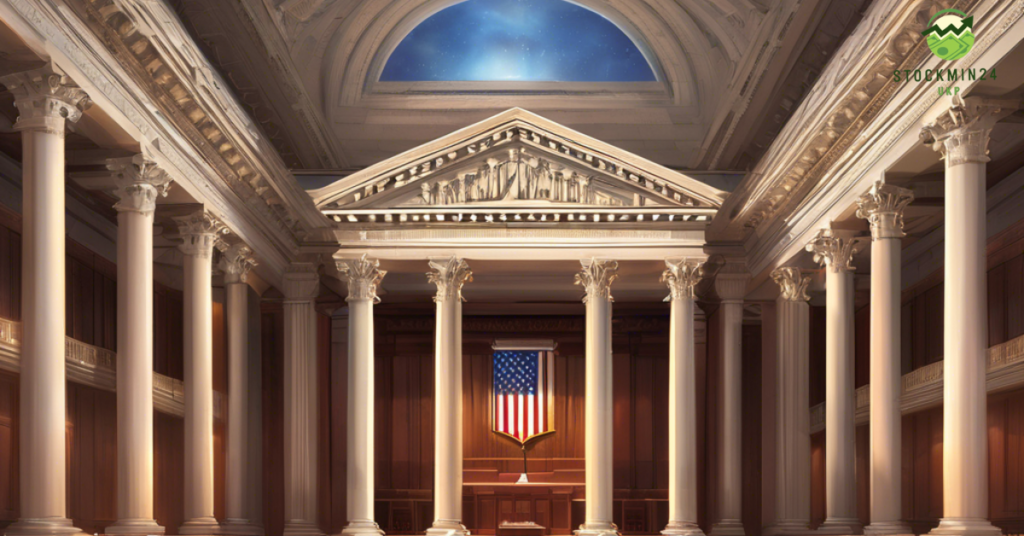
Supreme Court. In a landmark case with potentially far-reaching implications for public education, the U.S. Supreme Court has reached a 4-4 deadlock in a legal battle over the nation’s first religious charter school. The decision—or lack thereof—leaves intact a lower court ruling for now but fails to set a nationwide precedent, underscoring the ongoing tensions between religious freedom and the separation of church and state in American education.
The Controversy Unfolds
At the center of the debate is St. Isidore of Seville Catholic Virtual School, an Oklahoma-based charter school approved by the state’s Charter School Board in 2023. The school planned to operate as an online public charter school with explicit religious instruction—a move that ignited both praise and condemnation across political and educational spheres.
Proponents argued that denying religious organizations the opportunity to run public charter schools constitutes discrimination against religious entities. Opponents, however, countered that allowing a religious charter school funded by taxpayers violates the Establishment Clause of the First Amendment, which prohibits government endorsement of religion.
The Legal Showdown
The case reached the Supreme Court after the Oklahoma Attorney General and several civil rights and secular advocacy groups sued to block the school’s opening, citing constitutional concerns. Lower courts delivered mixed rulings, with the federal appellate court upholding the school’s right to operate. When the case reached the nation’s highest court, legal analysts anticipated a definitive ruling that would clarify the constitutional boundaries surrounding religious charter schools.
Instead, the Supreme Court issued a one-sentence statement noting that the justices were “equally divided,” a rare but not unprecedented outcome. The result affirms the lower court’s decision but leaves unresolved the broader legal question of whether public charter schools can legally operate as religious institutions.
Implications for Charter Schools Nationwide
Charter schools, which are publicly funded but independently run, have long existed in a legal gray area when it comes to questions of religious affiliation. While public schools are required to remain secular, the autonomy granted to charter schools has fueled debate over whether they should be allowed the same religious freedoms as private schools.

The deadlock has created an unsettling ambiguity for other states watching closely. Education departments and charter school advocates across the country now face uncertainty regarding whether they can or should approve religiously affiliated charter schools. The lack of a decisive ruling means future cases are likely, especially as more religious organizations may now consider applying for charter status.
A Divided Court Reflecting a Divided Nation
The 4-4 split is emblematic of the nation’s broader polarization on issues of religion in public life. The ideological divide among the justices reportedly reflected this national rift. Conservative justices expressed concern that excluding religious institutions from public programs constitutes religious discrimination. Liberal justices, in contrast, worried that taxpayer funding of religious instruction violates constitutional protections against government establishment of religion.
Legal scholars point out that the deadlock may have been exacerbated by the absence of one justice—possibly due to recusal—leaving an even number on the bench. With no majority, the Court was unable to issue a binding decision that would settle the issue nationwide.
Political and Public Response
The decision has sparked strong reactions on both sides of the aisle:
- Religious liberty advocates hailed the deadlock as a tentative victory, emphasizing that the lower court’s ruling in favor of the school still stands.
- Civil liberties organizations, such as the ACLU and Americans United for Separation of Church and State, expressed deep concern, warning that public funds could now be used to propagate religious doctrines.
- Educators and parents remain divided, with some welcoming greater school choice and others fearing the erosion of secular public education.
What Comes Next ?
For now, St. Isidore of Seville Catholic Virtual School is free to operate as a religious charter school in Oklahoma. However, the decision does not carry the weight of a nationwide precedent. Future litigation is inevitable, especially if other states begin approving similar religious charter schools.
The unresolved question is whether a future Supreme Court—perhaps with all nine justices present—will revisit the issue and issue a definitive ruling. Until then, the balance between religious freedom and church-state separation in public education remains precarious and deeply contested.
FAQ Table: Religious Charter Schools and the Supreme Court Case
| Question | Answer |
|---|---|
| What is a charter school? | A charter school is a publicly funded but independently run school that operates under a contract or “charter” with a state or local authority. |
| Can charter schools be religious? | Traditionally, no. Charter schools must adhere to constitutional guidelines prohibiting public funding of religious institutions. |
| What was this Supreme Court case about? | The case addressed whether a religious organization can operate a publicly funded charter school that includes religious instruction. |
| What was the outcome of the case? | The Supreme Court deadlocked 4-4, leaving the lower court’s decision (allowing the religious charter school to operate) in place. |
| Does this ruling apply nationwide? | No. A 4-4 deadlock does not establish precedent and only affects the immediate case, in this instance allowing the school in Oklahoma to open. |
| Why was the Court deadlocked? | One justice likely recused themselves, leaving eight justices to deliberate, resulting in a tie. |
| What are the arguments for religious charter schools? | Advocates argue that excluding religious groups from charter school opportunities is discriminatory and violates religious liberty. |
| What are the arguments against them? | Opponents argue that taxpayer funding of religious instruction violates the Establishment Clause of the First Amendment. |
| Will more religious charter schools be approved? | Possibly. The deadlock may encourage more applications, but legal uncertainty remains until a definitive ruling is issued. |
| Is this issue likely to return to the Supreme Court? | Yes. Given the national interest and lack of clear precedent, similar cases are likely to be appealed to the Supreme Court in the future. |
Additional Table: Key Legal Concepts
| Legal Term | Definition |
|---|---|
| Establishment Clause | A clause in the First Amendment prohibiting the government from establishing an official religion. |
| Free Exercise Clause | A First Amendment clause that protects citizens’ rights to practice their religion freely. |
| Precedent | A legal principle established by a prior court decision that guides future cases. |
| Deadlock | A situation where the Supreme Court is evenly split, resulting in no majority decision. |
| Recusal | When a judge or justice abstains from participating in a case due to potential conflict of interest. |
Conclusion: A Nation at a Legal Crossroads
The Supreme Court’s deadlock in the case over the first religious charter school marks a critical moment in the ongoing debate over religion’s role in public education. While the ruling allowed one school to operate with religious instruction, it also failed to resolve a constitutional quandary that impacts schools, families, and policymakers across the country.
This unresolved issue leaves room for future legal battles that may shape the educational landscape for generations. Until a full Supreme Court bench revisits the matter and sets a clear precedent, the future of religious charter schools in America hangs in the balance—caught between the pillars of religious freedom and the principle of church-state separation.