


Supreme Court Deals Blow to Trump, Says in Emergency Order He Can’t Deport Venezuelan Migrants
Trump. In a significant legal setback for former President Donald Trump, the U.S. Supreme Court issued an emergency order blocking the deportation of certain Venezuelan migrants. The ruling comes as Trump has been vocal about reinstating his hardline immigration policies, particularly targeting migrants from troubled regions like Venezuela. With this decision, the highest court in the land draws a legal boundary around executive authority over immigration enforcement—especially in humanitarian contexts.

Background: Venezuela and the U.S. Immigration Crisis
Venezuela has been in the grips of economic collapse, political unrest, and widespread human rights abuses for nearly a decade. Millions have fled the country, creating one of the largest displacement crises in the world. The United States, under both Democratic and Republican administrations, has grappled with how to handle the influx of Venezuelan asylum seekers and migrants.
President Joe Biden extended Temporary Protected Status (TPS) for Venezuelans already in the U.S., a move aimed at preventing their deportation due to unsafe conditions back home. However, Donald Trump has signaled intentions to roll back such protections if re-elected, labeling them as “loopholes” in immigration enforcement.
The Supreme Court’s Emergency Order
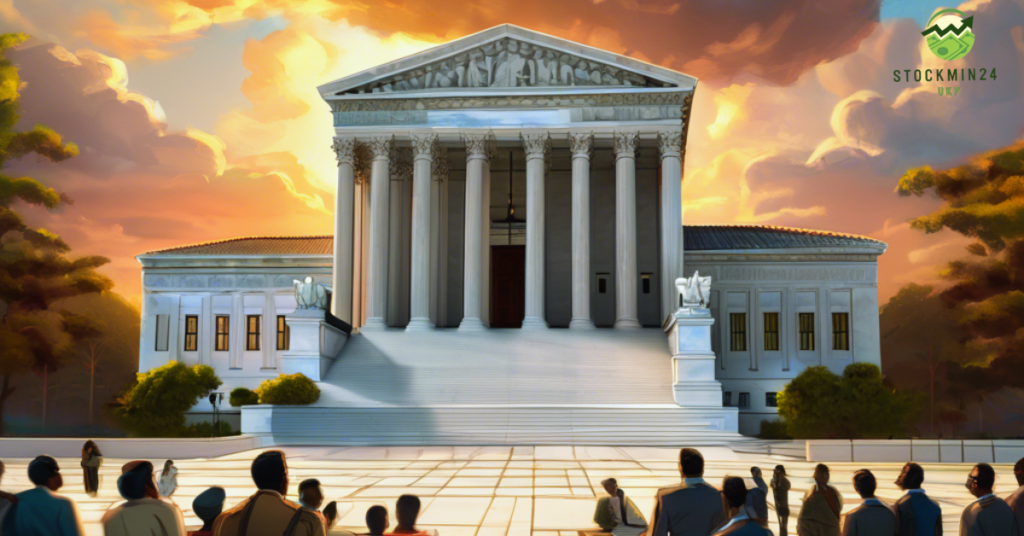
The emergency order, issued without a full hearing or written opinion, temporarily blocks federal immigration officials from removing Venezuelan migrants protected under specific humanitarian designations such as TPS or pending asylum claims.
Key Points of the Ruling:
- Applies to Venezuelans who are currently under protected status or in the process of seeking asylum.
- Bars federal agencies from initiating deportation proceedings under certain circumstances.
- Emphasizes humanitarian protections over executive immigration enforcement in this specific case.
Legal and Political Implications
For Trump:
The decision curtails Trump’s efforts to expand deportations rapidly, especially of migrants from nations experiencing crises. It also serves as a reminder that even with executive authority, immigration enforcement must operate within the boundaries set by humanitarian law and existing legal protections.
For the Biden Administration:
This order reinforces Biden’s existing policies that aim to offer humanitarian relief to migrants from unstable regions. It could bolster his position among immigrant communities and human rights advocates ahead of the 2024 presidential election.
For Migrants:
Venezuelan migrants facing deportation now have temporary legal protection. This provides some stability as many continue the lengthy process of applying for asylum or other legal residency pathways.
Expert Reactions
Constitutional scholars note that the emergency order signals the Court’s willingness to intervene when humanitarian obligations are at stake, even in the absence of a full hearing.

Immigration advocates have welcomed the ruling, stating that it reflects the reality on the ground in Venezuela and the U.S.’s moral obligation to protect the vulnerable.
Conservative groups, however, argue that the decision undermines executive authority and hampers efforts to maintain border security.
FAQ Table: Supreme Court Ruling on Venezuelan Migrant Deportations
| Question | Answer |
|---|---|
| What did the Supreme Court decide? | The Court blocked the deportation of Venezuelan migrants protected under TPS or asylum processes via an emergency order. |
| Is this a final decision? | No. This is a temporary ruling; a full hearing and decision may follow. |
| Who benefits from this ruling? | Venezuelan migrants in the U.S. with TPS or pending asylum claims. |
| Does this affect other migrant groups? | No, the ruling is specifically tailored to Venezuelan migrants. |
| Why did the Court intervene? | Due to legal challenges and humanitarian concerns regarding deportation to Venezuela. |
| What does this mean for Trump’s immigration plans? | It restricts his ability to swiftly implement deportation policies for protected groups. |
| Can the decision be overturned later? | Yes, a future full hearing could lead to a different outcome. |
| How does this impact U.S. immigration policy overall? | It adds a legal layer protecting humanitarian-focused immigration approaches. |
Current TPS Designations: Selected Countries
| Country | Reason for TPS | Expiration (as of latest update) |
|---|---|---|
| Venezuela | Ongoing political & humanitarian crisis | Extended through April 2026 |
| Haiti | Earthquake recovery & political unrest | Extended through August 2025 |
| Syria | Armed conflict and humanitarian concerns | Extended through March 2026 |
| El Salvador | Natural disasters and gang violence | Extended through September 2025 |
Conclusion: A Precedent-Setting Moment
The Supreme Court’s decision to temporarily block deportations of Venezuelan migrants sets a precedent with both legal and humanitarian implications. It not only complicates Trump’s proposed immigration strategies but also highlights the U.S. judiciary’s role in shaping immigration policy through the lens of human rights and legal protections.
As the 2024 presidential election looms, this ruling may serve as a critical touchstone in the ongoing national debate over immigration reform, executive authority, and the balance between border control and compassion.
This moment could well be remembered as a turning point in how America defines its responsibilities to those fleeing political and humanitarian crises—a nation not only of laws but of refuge.