

5 Key Metrics to Monitor as 2025 Unfolds on Wall Street
5 Key Metrics As the stock market embarks on its journey in 2025, investors find themselves at a critical juncture following an exceptional 2024. While the S&P 500 Index soared nearly 25% last year, recent shifts in market sentiment and trends have raised questions about the road ahead. Here are five essential metrics investors should track to navigate the markets effectively in 2025.

- Market Sentiment: Fear Signals an Opportunity
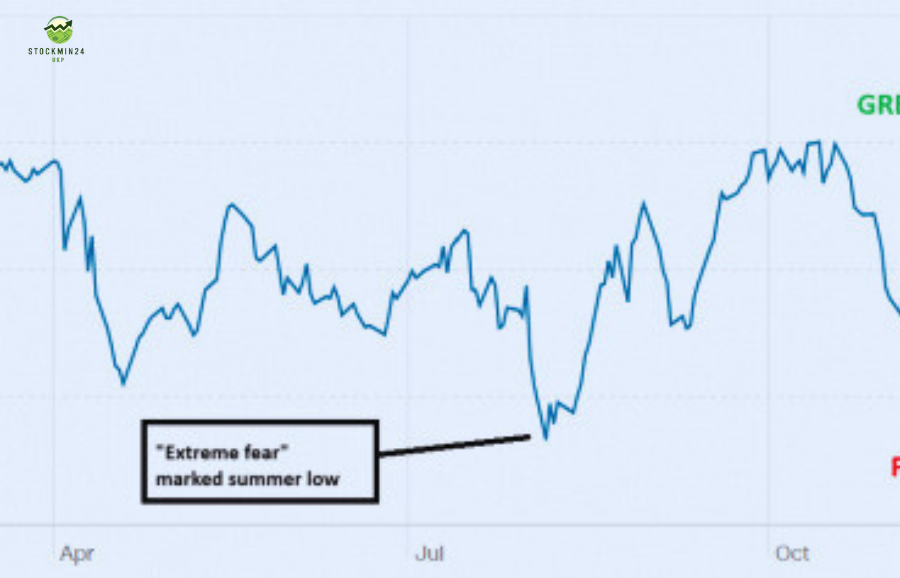
After an impressive bull run in 2024, the market sentiment has taken a sharp turn. The “CNN Fear and Greed Index” recently plunged into “Extreme Fear” territory on December 19, triggered by a modest pullback fueled by Federal Reserve policies.
Historically, such extreme fear levels often serve as contrarian indicators, hinting at potential market bottoms. While sentiment is considered a secondary indicator, it can complement primary metrics when identifying opportunities. Investors who align this with robust technical or fundamental trends may position themselves for gains during periods of heightened pessimism.
- Intermediate Market Trends: The 10-Week Moving Average
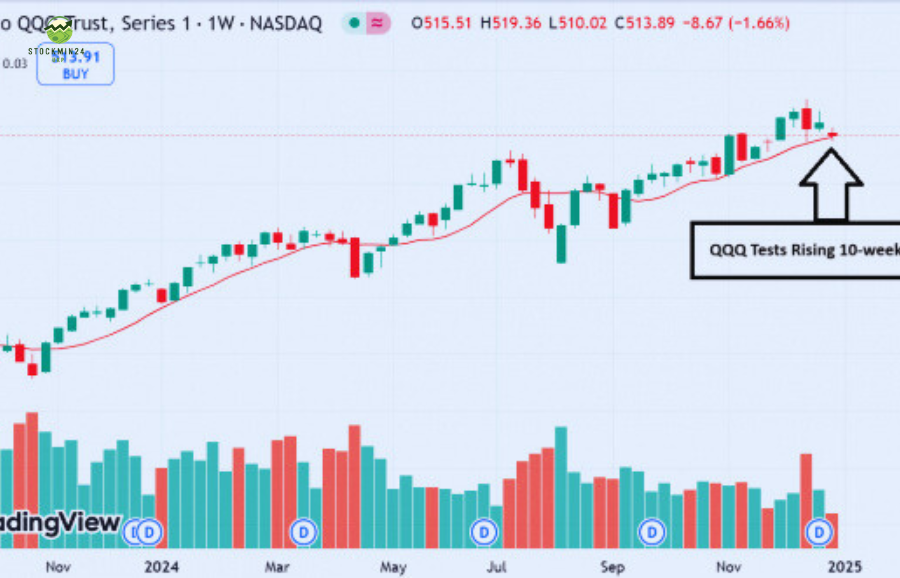
Price action remains a primary indicator for evaluating market trends. The 10-week moving average (MA) serves as a reliable benchmark for assessing the intermediate market direction.
In recent months, technology stocks have led the charge, with the Nasdaq 100 Index ETF (QQQ) consistently trading above its 10-week MA since September. Currently, QQQ is testing this key level. If bulls can maintain support above the 10-week MA, it will confirm that the intermediate trend remains intact. Investors should focus on tech-heavy indices like the Nasdaq to gauge broader market health.
- Small-Cap Stocks: A January Rebound?
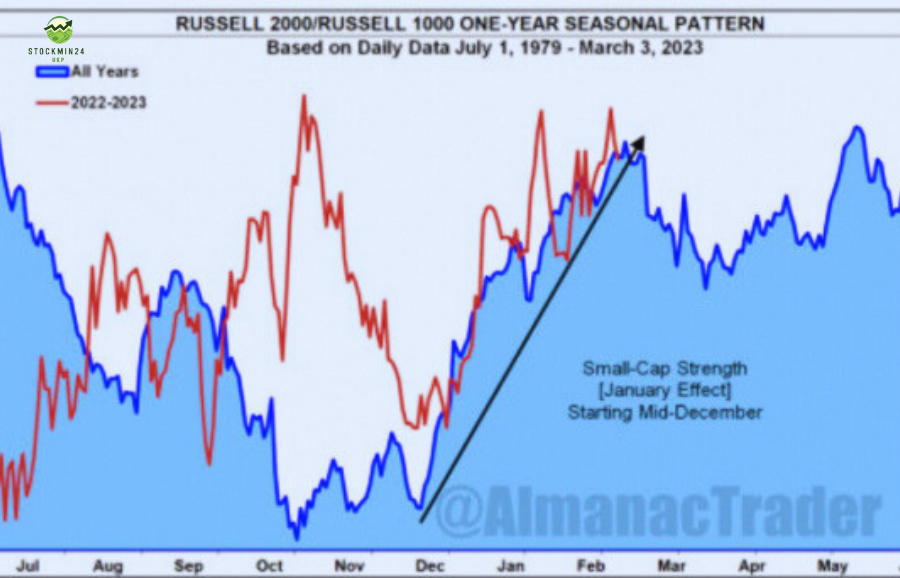
Small-cap stocks underperformed large caps significantly in 2024, as seen in the performance of the Russell 2000 Index ETF (IWM). However, the tide might turn as January kicks off.
Historically, small-cap stocks experience a seasonal surge in January, a phenomenon often referred to as the “January Effect.” This year, IWM is finding support near its rising 200-day MA, a critical long-term level. Investors with a contrarian outlook may find opportunities in small-cap stocks poised for recovery during this period.
- Risk-On Indicators: Spotting Bullish Signals
Risk-on assets remain a crucial indicator of investor sentiment. Stocks like Rigetti Computing (RGTI), Intuitive Machines (LUNR), and Unity Software (U) have continued to attract buyers, signaling resilience in high-growth sectors.
However, the rising US Dollar ETF (UUP) warrants caution. A strengthening dollar typically creates headwinds for equities, especially in sectors with significant international exposure. Investors should balance their portfolios by monitoring both risk-on stocks and macroeconomic indicators like currency trends.
- Weak Year-End Does Not Equal a Weak Start
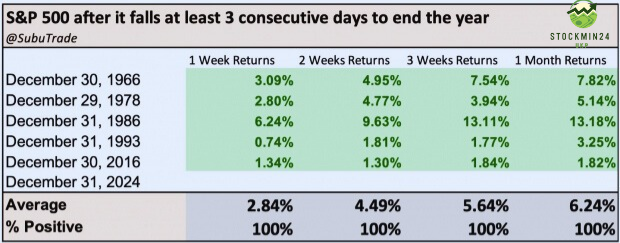
The stock market closed 2024 on a sour note, with three consecutive red sessions that dampened the usual “Santa Rally.” While this might seem discouraging, historical data paints a different picture.
Over the past century, when the S&P 500 has ended the year with three consecutive losses, it has rebounded strongly in the first week and month of the new year 100% of the time (in five instances). Investors should not let a weak year-end overshadow the potential for a robust start to 2025.
Key Takeaways for 2025 Investors
After a stellar performance in 2024, the market now faces a more uncertain landscape. Sellers appear to be gaining control, but this doesn’t necessarily spell doom for equities. By keeping a close eye on the metrics discussed above, investors can position themselves to capitalize on opportunities in 2025.
Proven Investment Strategies for 2025
For those seeking curated investment opportunities, the Zacks Top 10 Stocks for 2025 portfolio is a powerful resource. Over the past decade, this portfolio has delivered extraordinary returns, significantly outpacing the S&P 500. Handpicked by Sheraz Mian, Zacks’ Director of Research, these stocks represent the best opportunities for long-term growth.
By focusing on robust research and proven performance, investors can make informed decisions that align with their financial goals. Whether you’re a seasoned investor or a newcomer, understanding these market dynamics is critical for navigating the complexities of 2025.
Optimize Your 2025 Strategy
As Wall Street kicks off a new year, the key to success lies in staying informed and agile. Monitor sentiment, trends, seasonality, and risk indicators to make data-driven decisions. Remember, the market rewards those who remain proactive and adaptive in the face of uncertainty.
Whether it’s leveraging historical patterns, analyzing technical indicators, or embracing a contrarian approach, 2025 offers ample opportunities for those willing to do the work. Stay focused, stay informed, and seize the year ahead.
- Why is monitoring market sentiment important?
Market sentiment, such as the CNN Fear and Greed Index, reflects the emotions of investors. Extreme fear often serves as a contrarian signal, indicating potential buying opportunities when paired with other strong market metrics.
- What is the significance of the 10-week moving average?
The 10-week moving average (MA) is a critical technical indicator used to determine intermediate market trends. If a stock or index stays above this level, it typically signals that the trend remains bullish.
- What is the “January Effect”?
The January Effect is a historical trend where small-cap stocks outperform during the month of January. This is often due to portfolio rebalancing and renewed investor interest in undervalued stocks at the start of the year.
- What are risk-on and risk-off indicators?
Risk-on indicators suggest investors are willing to take risks, often reflected in the performance of growth stocks like tech companies.
Risk-off indicators show a preference for safer investments like bonds or defensive stocks.
Monitoring these indicators helps investors understand overall market sentiment and potential shifts in trends.
- Should I be concerned about a weak year-end performance in the market?
Not necessarily. Historical data indicates that a weak year-end performance does not always lead to a poor start to the following year. For instance, the S&P 500 has shown strong recoveries in similar scenarios within a week or month.
- How can a rising US dollar impact equities?
A rising US dollar often creates challenges for companies with significant international operations. It makes US exports more expensive and can hurt earnings for these businesses, acting as a headwind for equities.
- What is the Zacks Top 10 Stocks portfolio?
The Zacks Top 10 Stocks portfolio is a curated selection of stocks chosen annually by Zacks Research. These stocks are identified based on strong fundamentals, growth potential, and performance consistency, designed to deliver superior returns over the year.
- How can I use these insights to improve my investment strategy?
By tracking the discussed metrics—sentiment, moving averages, seasonality, and risk-on indicators—you can make informed decisions. Combining these insights with a diversified portfolio and a focus on long-term growth can improve your overall strategy.
- Is now a good time to invest in small-cap stocks?
Small-cap stocks often perform well in January due to the “January Effect.” If supported by technical indicators like the 200-day MA, this might be an opportune time for investors to explore small-cap investments.
- How should I approach the market in 2025?
Stay informed, monitor key indicators, and remain flexible. Use data-driven strategies, such as tracking moving averages and sentiment indexes, while keeping an eye on macroeconomic trends like the strength of the US dollar. A balanced approach is essential for navigating the year ahead